Starting point
DepotCharge provides solutions for charging and billing in depot and high-power environments. Customers often already have a backend, contracts and operating processes – and still want to introduce or extend billing without a multi-year IT integration against every legacy system.
At the same time, hardware demands rise: DC chargers at very high power (up to 1,000 kW) must stay reliably connected even when billing, monitoring or extra logic is added.
Solution: broker as integration layer plus mini CPMS
DepotCharge uses the NeLeSo OCPP Broker to route charge points – including high-power DC chargers – to existing backends while attaching its own billing logic in parallel. The broker remains the stable peer for the chargers; routing and additional services can be controlled independently.
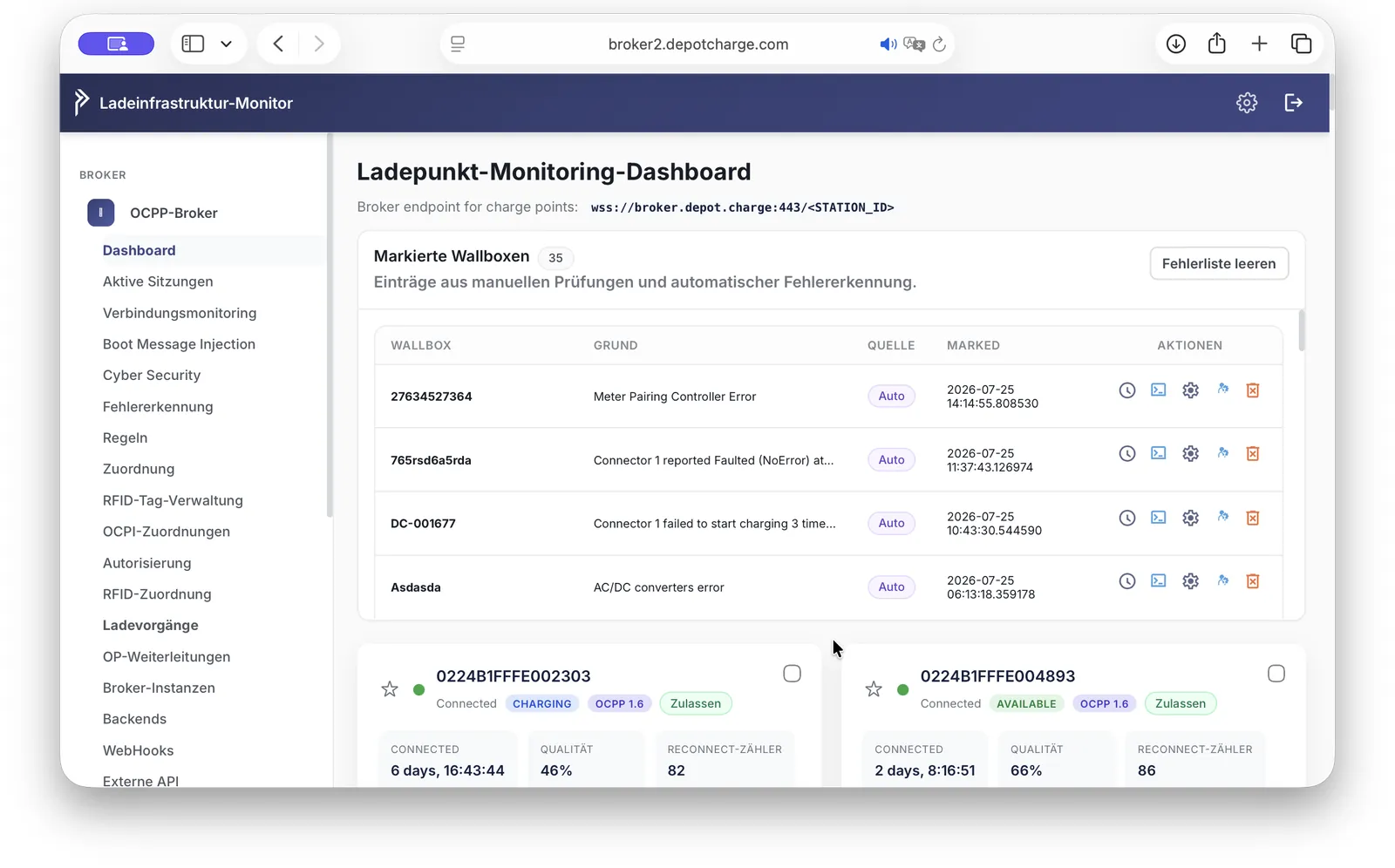
In the broker dashboard DepotCharge sees the estate live: flagged wallboxes from error detection, connection quality, session status and the operating actions that matter – without querying every legacy backend first.
On top, the integrated mini CPMS covers the flows DepotCharge needs for billing and operations, without forcing a full third-party CPMS onto the customer. The result is a lean path: billing and ops tools where they are needed – legacy systems stay connected for as long as the customer wants.
Transparency into high-power sessions
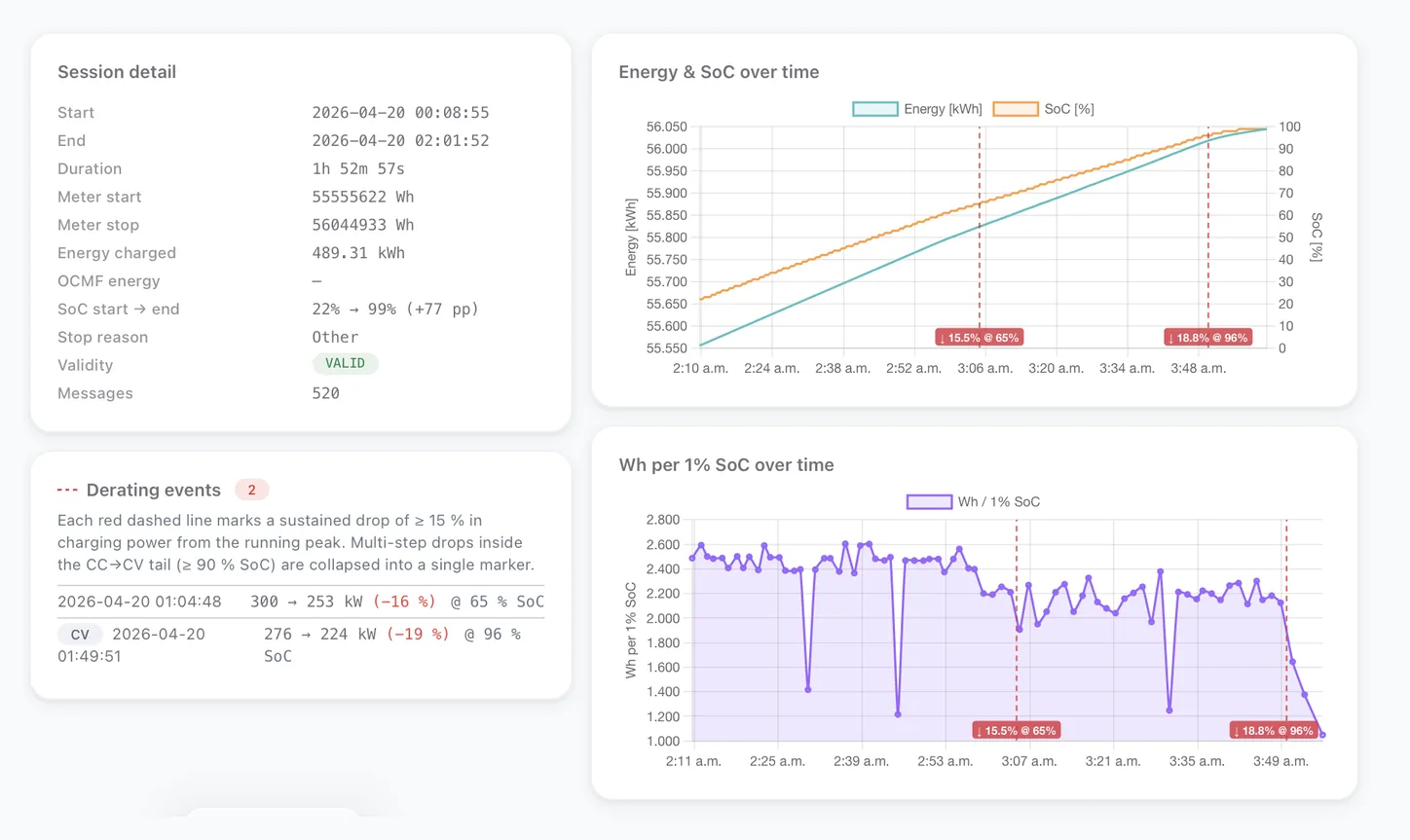
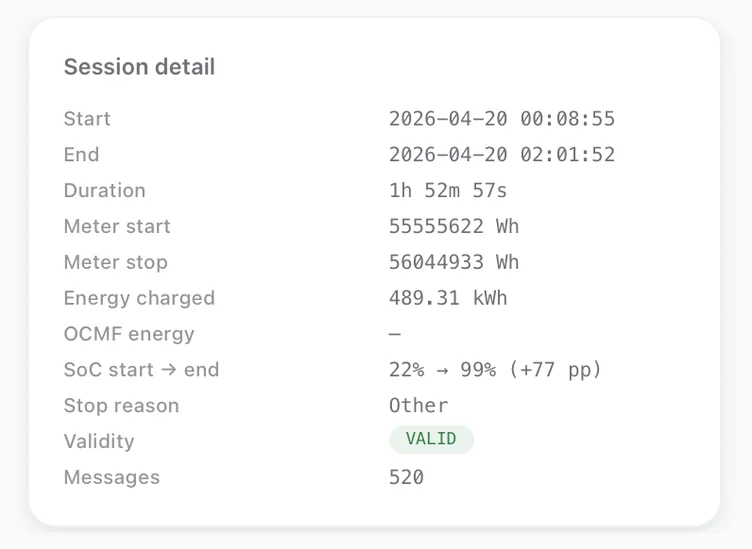
For billing and operations, “charger online” is not enough. DepotCharge analyses sessions in detail: energy and SoC over time, derating events from a 15% power drop, and metrics such as Wh per percent SoC – traceable for fleets and depot operators.
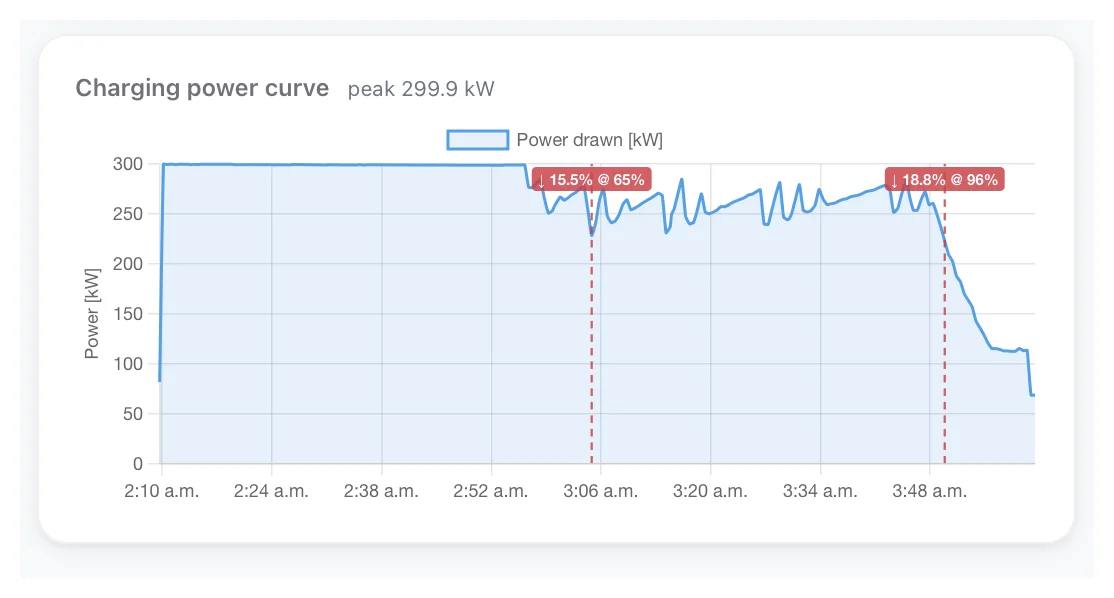
The charging power curve makes the high-power case clear: a peak near 300 kW, a plateau and explicit markers for power reductions as SoC rises. That transparency matters when DC chargers up to 1,000 kW share the same broker path and billing must stay reliable.
Integration without a big-bang IT project
Instead of wiring every customer IT stack against every OCPP variant and backend, complexity sits in the broker layer. New sites or charger groups can be onboarded via the broker; existing backends remain reachable while DepotCharge provides billing and the required operating functions.
For operators that means less dependency on the legacy vendor’s roadmap and interfaces. For DepotCharge it means a repeatable integration pattern instead of one-off custom work per tenant.
High-power DC in the same model
DC chargers up to 1,000 kW follow the same broker path. Decoupling does not depend on charging power: sessions, routing and attachment to legacy systems share one operating model – essential when depots and HPC sites grow side by side.
Outcome
DepotCharge can introduce billing and mini-CPMS capabilities at customer sites without first replacing the existing backend landscape. The OCPP Broker carries the integration load; high-power DC and session transparency stay part of the same operating model.
More about DepotCharge: depotcharge.com.